
A compact yet ultra-high-performance laboratory aboard a hospital ship: Breanna’s inspiring story
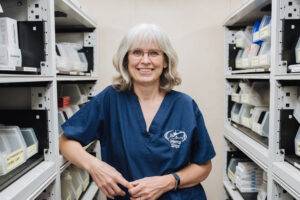
Breanna Charleson, a medical laboratory technologist from southern Ontario, has always had a passion for travel and an insatiable curiosity about the daily lives of people around the world. During her years of study at Ontario Tech University, she tirelessly sought opportunities to volunteer in laboratories abroad. But in a field as demanding as medical laboratory technology—where equipment is highly specialized—doors seemed to close one after another.
Everything changed the day she discovered Mercy Ships. For this determined young woman, it was a revelation: her long-held dream of serving internationally could finally become a reality.
Discovering Mercy Ships and Its Hospital Ships
Through its two largest civilian hospital ships in the world, Mercy Ships provides free surgeries in regions where access to healthcare remains a major challenge. These giants of compassion—far more than floating hospitals—are operatedby hundreds of volunteers from 75 countries, serving in a wide range of roles in the medical field and beyond. The organization is also committed to strengthening local healthcare systems by offering training and mentorship to healthcare professionals in the area.
Currently, two ships sail the oceans under the Mercy Ships banner: the Africa Mercy® and the Global Mercy™. Among the volunteers who have shaped their history is Breanna, who had the opportunity to serve aboard both vessels as medical laboratory technologist, taking part in missions in Senegal and Sierra Leone. Initially departing for a five-month assignment aboard the Africa Mercy starting in the summer of 2022, her journey extended far beyond her expectations—first and extension to eight months, then nearly a two year service. Still today, she speaks of her experience with nostalgia, wondering when she would be able to return again.
Life Aboard a Hospital Ship
“Living aboard a hospital ship was a unique, unforgettable experience.” Breanna, a dedicated volunteer, enthusiastically describes this community, where people from surprisingly diverse backgrounds come together: “There are young people of 18 on gap years, retirees, singles, couples, and even families, all accommodated in specially adapted cabins.”
A true floating village, the Mercy Ships hospital ship offers far more than a medical community: over 200 professions are represented (see inset), covering both hospital needs and daily life on board. From volunteer cabins to the dining hall, café, gym, library, and many other spaces, every detail is designed to foster a close-knit and collaborative environment.
“There’s always something happening on board,” Breanna shares, “but what I especially love are the moments spent exploring the countries we visit.”
A human and professional adventure, where commitment blends with wonder.
A Versatile Laboratory: Comprehensive Services Dedicated to Healthcare
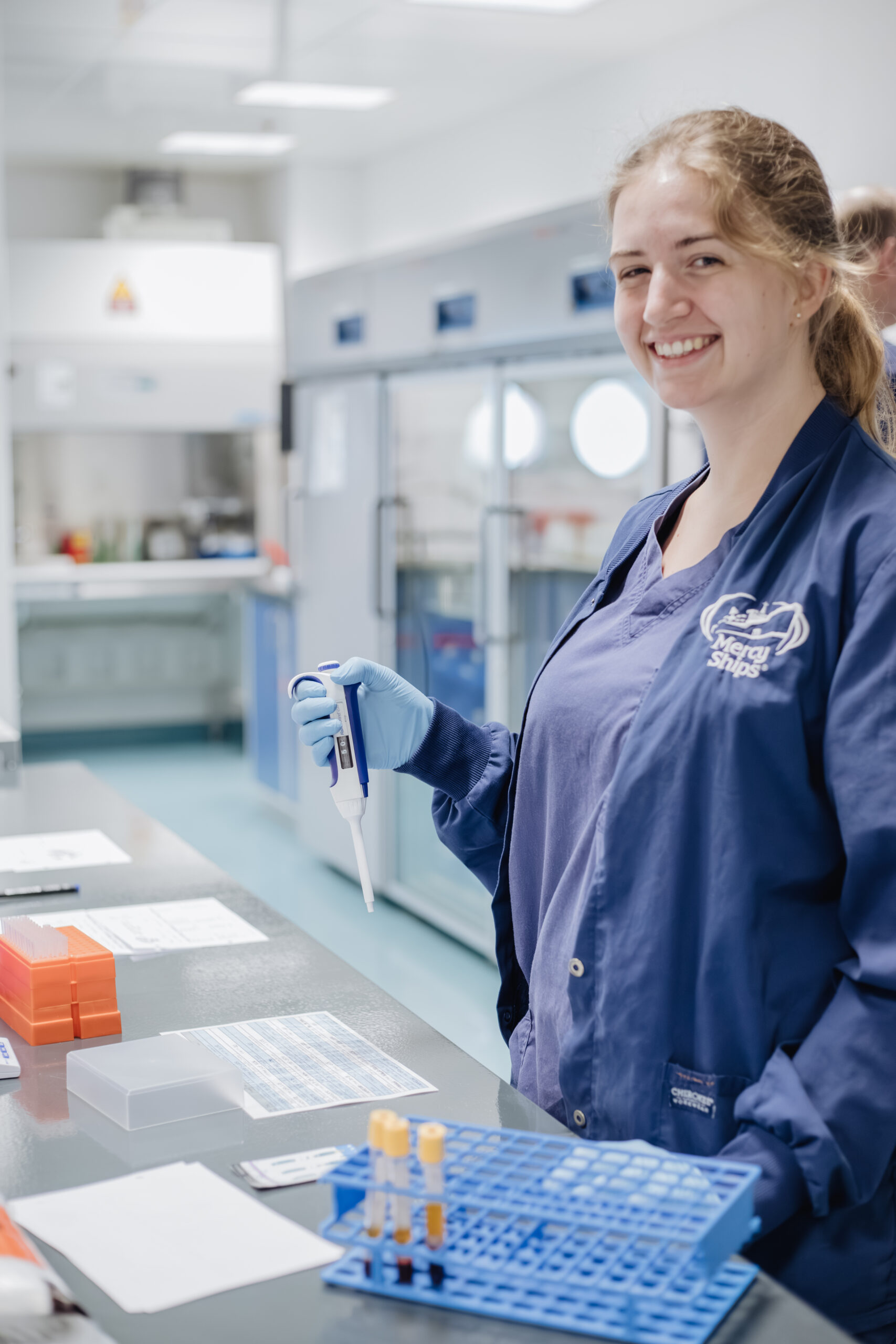
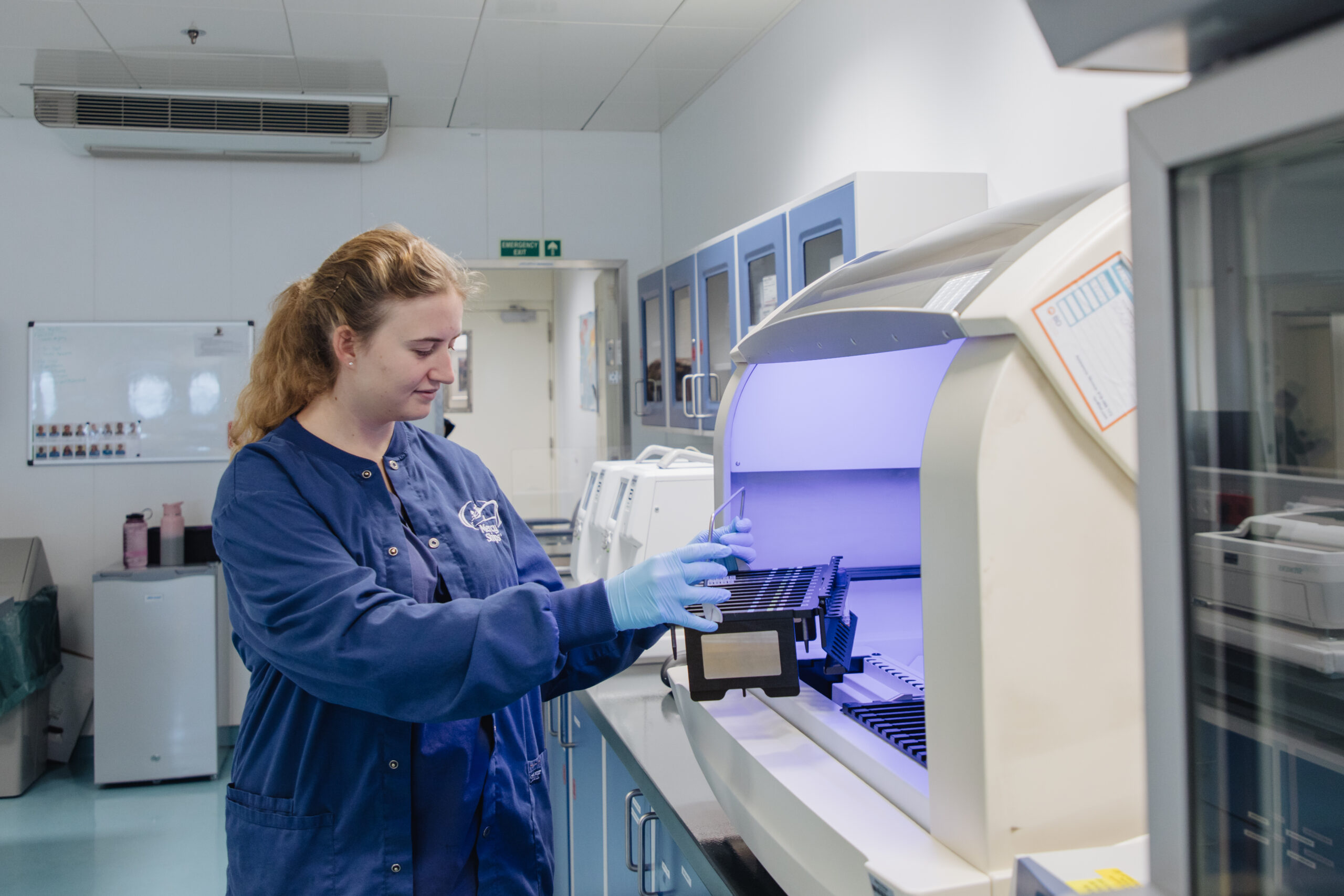
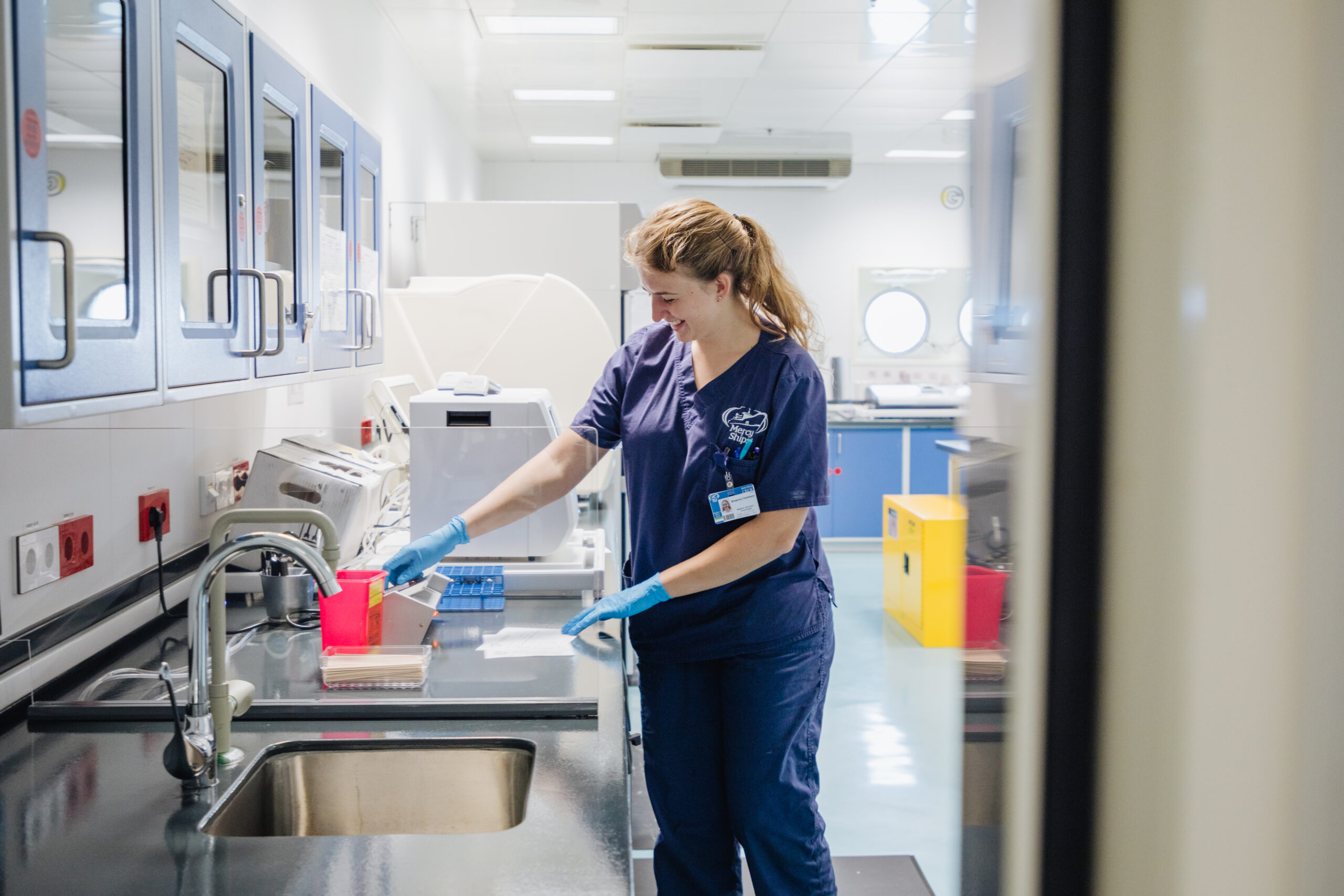
Aboard the hospital ship, the laboratory is a crucial pillar, organized into several specialized areas: hematology, chemistry, blood bank, and microbiology. These spaces allow technologists to apply their expertise for the benefit of patients and medical teams, optimizing every step of care.
Pathology services occupy a central role, including procedures such as fine-needle aspirations and touch preparations, which are analyzed remotely by pathologists using specialized microscopes. Histology samples collected in the operating room are fixed in formalin and then sent to a partner laboratory in the United States for detailed analysis.
As a surgical hospital, the laboratory primarily focuses on patient screening, preoperative evaluations, surgical support, and postoperative follow-up. It also plays a key role for the crew clinic, performing tests for volunteers who require medical care.
Open Monday through Friday, the laboratory maintains continuous care through a team of three technologists in addition to a lead technologist, who rotate shifts to ensure coverage even outside standard hours. A rigorous organization, fully dedicated to a demanding humanitarian mission.
A State-of-The-Art Working Environment
“When I arrived, the chief technologist showed me around the lab, describing it as ‘small but very efficient’—and she was absolutely right,” says Breanna.
Although modest in size, this laboratory offers a particularly wide range of tests. Unlike Canadian hospitals, which can rely on reference laboratories, resources on board are more limited. While there are collaborations with local laboratories, the ship's laboratory must first and foremost operate independently.
Before joining the team, Breanna had already gained solid experience in microbiology in a small hospital laboratory. On board, she expanded her skills: hemoglobin electrophoresis for sickle cell patients, thyroid tests for patients who have undergone thyroid surgery, CD4 screening for HIV-positive patients, and parasitology—an area of which she is particularly fond.
“I was able to observe cases of malaria in blood smears, schistosomes in urine samples, and even eggs from various parasites in stool samples,” she explains.
A memorable moment? “I proudly remember seeing live Ascaris lumbricoides worms in a sample,” she confides.
A Lasting Impact — From the Hospital Ship to Home
“Working in the Mercy Ships laboratory was an experience of immeasurable value,” Breanna shares. “What struck me most was the close, interdisciplinary collaboration between the hospital’s different departments. Everyone is driven by the same mission, the same passion,” she adds. “Meeting patients, hearing their stories, and seeing their gratitude was a profound source of motivation.”
Breanna also had the chance to work alongside medical laboratory technologists from around the world, exchanging knowledge and experiences.
“These interactions allowed me to learn so much and to form friendships with colleagues from all corners of the globe,” she recalls.
Even today, Breanna treasures the memory of her adventure with Mercy Ships.
“This experience strengthened my commitment to building connections with patients, even in a profession often carried out behind the scenes,” she explains.
Since returning to Canada, she has been working in a small rural hospital in northwestern Ontario, where she particularly values being able to put a face to every name she encounters daily in the laboratory.
“Mercy Ships showed me how laboratory work can truly change lives,” she emphasizes. “It also reminded me that every effort made in medical laboratories, anywhere in the world, plays an essential role in patient care and improving quality of life.”
A realization that continues to guide her professional dedication.
For more information on Mercy Ships Canada: www.mercyships.ca
JOIN OUR VOLUNTEER CREW AS:

[INSET]
The Hospital Ship Blood Bank: A Reflection of Onboard Solidarity to Save Lives
‘’I had the chance to donate blood a few times, and on one occasion I ended up being the one to deliver my own unit of blood to the OR,’’ Breanna recalls.
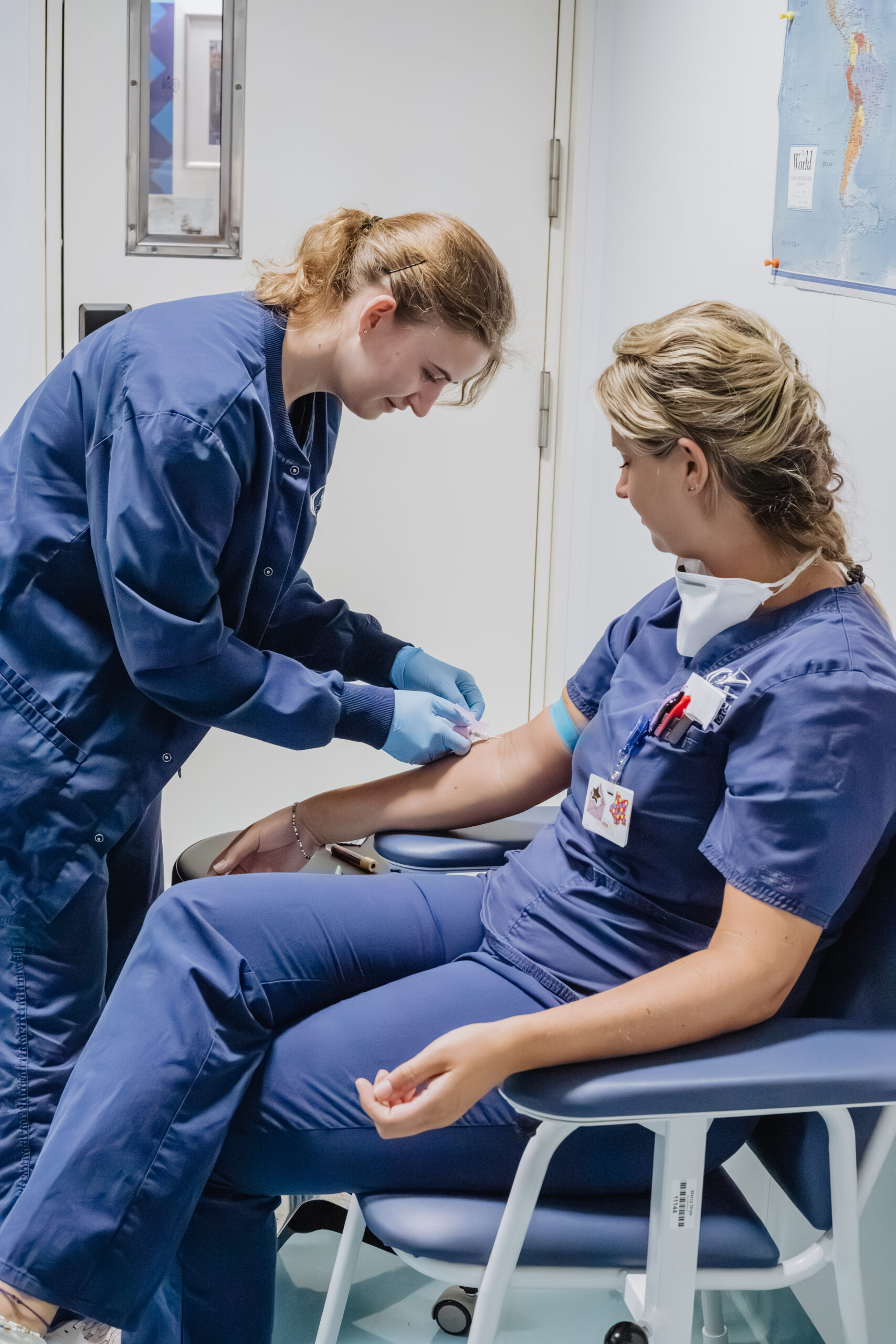
One of the most striking aspects of her experience on board was her work in the blood bank. Each bag administered to patients is collected by the laboratory team from crew members. Having worked in Canadian blood banks, Breanna realized the distance that can exist between donor and recipient.
“On board, it’s different: every bag carries the name of a colleague, a friend, a familiar face. You can’t forget the human connection behind each donation,” she explains.
The complete process—from donor selection and blood collection to compatibility testing and delivery to the operating room or relevant departments—makes the impact of every contribution tangible.
On the hospital ship, most transfusions are performed with whole blood, as the facilities do not allow separation into components such as platelets or plasma.
“When clotting factors are needed, the bags are collected as fresh as possible,” Breanna notes.
She herself donated blood multiple times, and on one occasion even personally delivered her own bag to the OR.
“The generosity and commitment of crew members to give blood is truly inspiring,” she concludes, moved.
An experience that gives new meaning to solidarity and mutual aid.
[INSET]
Over 200 Volunteer Opportunities on Board…
Beyond medical personnel—surgeons, nurses, physiotherapists, anesthetists, dentists, laboratory technicians—who make up roughly half of the volunteer positions, a wide range of other professions is essential to the smooth operation of the hospital ship: engineers and technicians across specialties, sailors—from deckhands to the captain—cooks, cleaning staff, housing managers, teachers (each ship has its own school), cafeteria and shop managers, and many more.
The most unexpected role? A barber, especially valued by long-term volunteers.