Deux frères, deux parcours : des compétences médicales transmises et consolidées pour corriger le pied bot
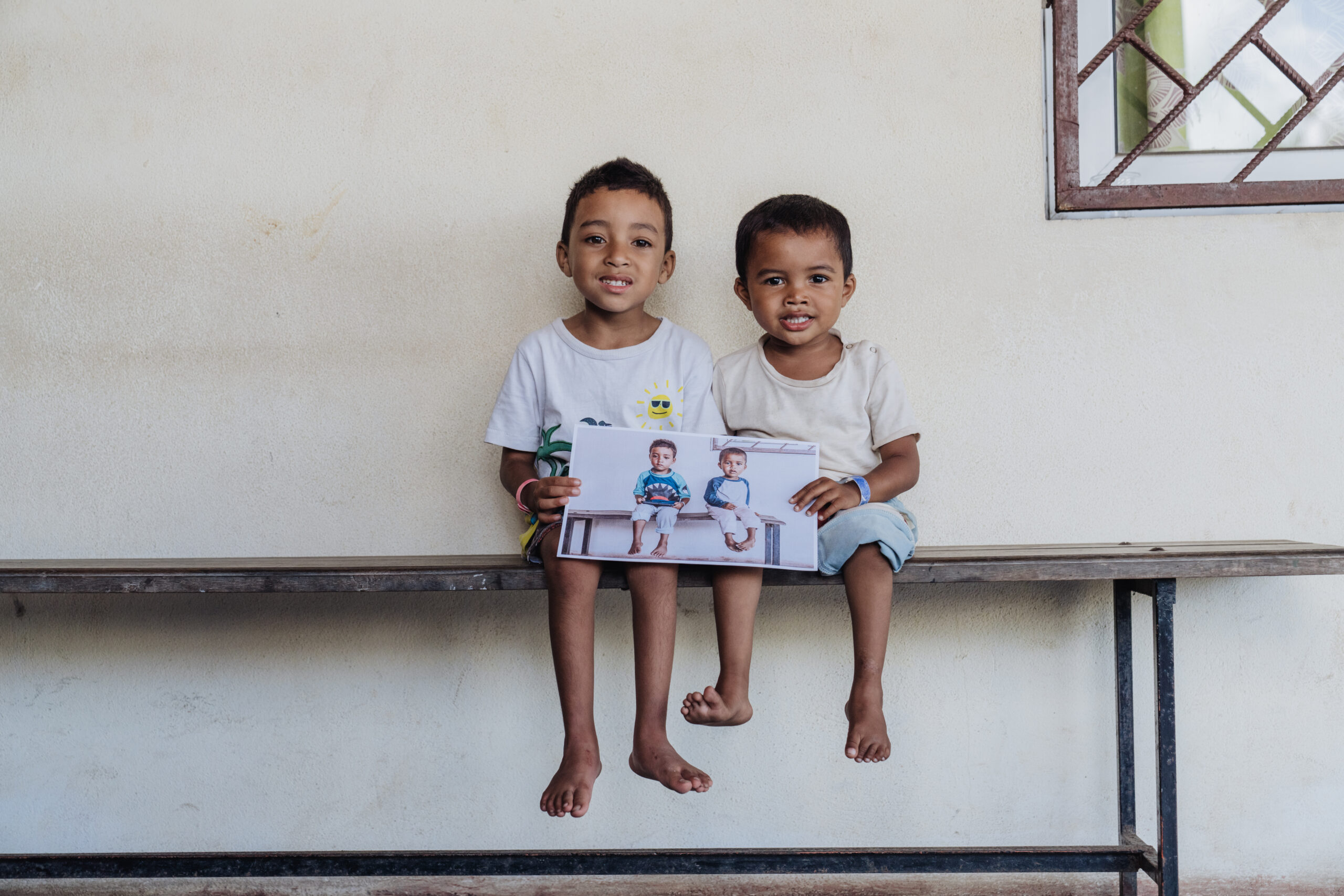
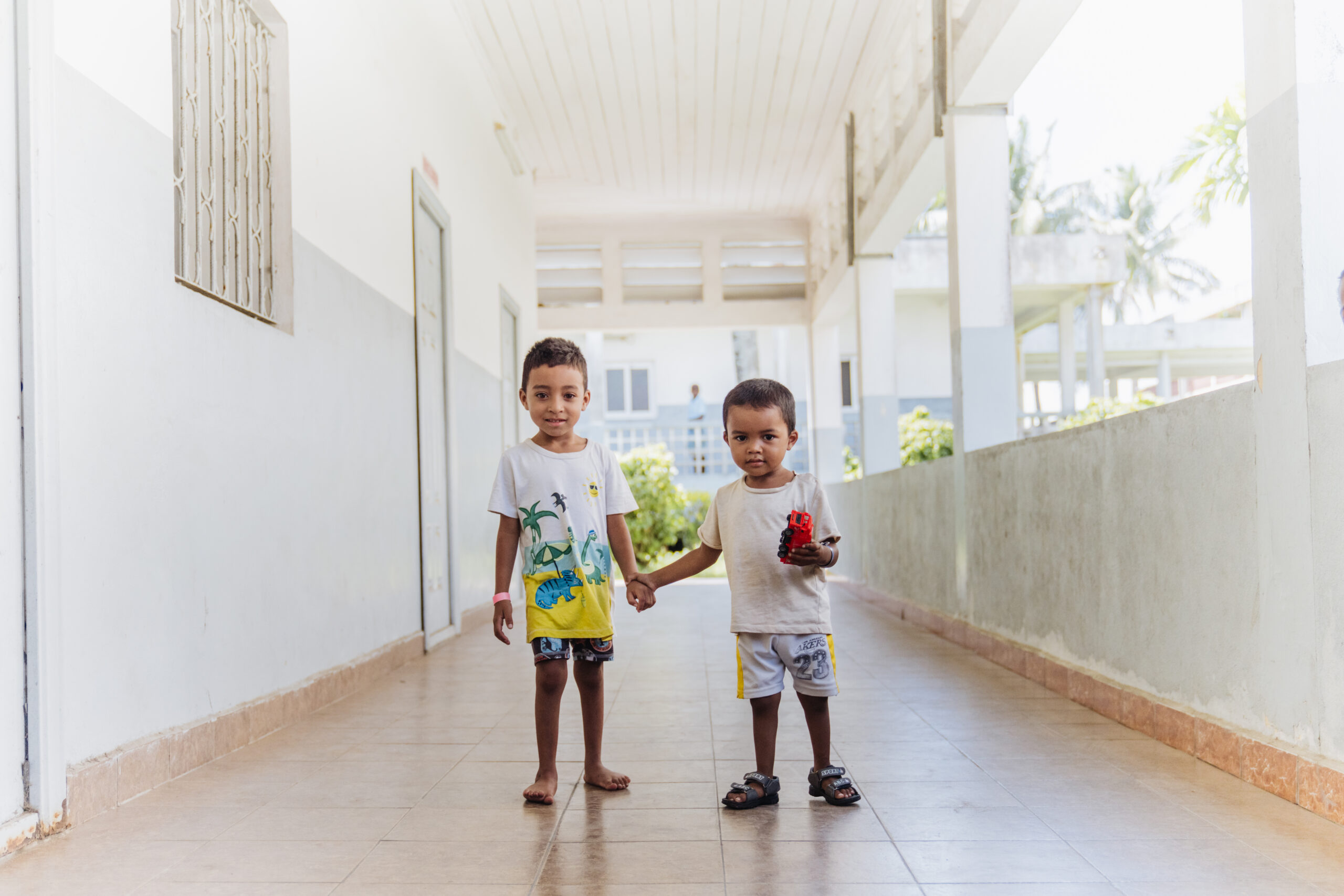
Un matin chaud à l’Hôpital Analakininina, l’hôpital local de Toamasina, deux frères sont assis côte à côte sur un banc en bois. Fanirisoa, cinq ans, parcourt la pièce d’un regard confiant, sa curiosité trahie par ses yeux qui scrutent chaque détail. À côté de lui, son jeune frère Vonjy, trois ans, se blottit contre leur mère. Plus réservé et silencieux, il cherche encore le réconfort de sa maman. L’environnement médical ne les empêche pas de rire et de se chamailler gentiment.
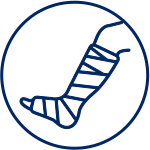
Ils sont tous deux nés avec un pied bot, une malformation congénitale qui tord le pied de l’enfant vers l’intérieur et vers le bas. Sans traitement, cette condition rend la marche douloureuse et limite la capacité de l’enfant à courir, jouer ou aller à l’école.
Quand Fanirisoa est né, ses parents ont fait ce que beaucoup de familles malgaches font lorsque l’accès aux soins spécialisés est limité : ils se sont tournés vers des méthodes traditionnelles, comme des massages et des bandages, espérant que ses pieds se redresseraient. Ces traitements ont apporté une légère amélioration, mais ce n’était jamais suffisant. En grandissant, Fanirisoa avait toujours du mal à marcher, et ses parents s’inquiétaient pour son avenir.
Quand Vonjy est né avec la même malformation, leurs inquiétudes se sont aggravées.
Leur père, Edmine, se souvient du poids émotionnel de ces premières années :
« C’était tellement douloureux pour eux de marcher », confie-t-il. « Ils pleuraient souvent. »
Dans leur village, leur démarche leur valait moqueries et surnoms blessants. Leurs parents ne répondaient pas.
« Nous ne disions rien », explique Edmine, « parce qu’il n’y avait rien à dire. »
Dix ans de formation pour deux parcours médicaux
Quand la famille a entendu parler de l'Africa Mercy® et d'une clinique spécialisée dans le pied bot à l'Hôpital Analakininina — la clinique Ponseti —, elle a décidé de se rendre sur place. Avec l'espoir que leurs fils puissent être soignés, ils ont quitté leur village des hauts plateaux de Madagascar et voyagé plus de huit heures jusqu'à la ville portuaire de Toamasina pour y trouver des soins.
À leur arrivée, les deux garçons ont été examinés.
Au premier abord, ce qui suivit pouvait sembler déroutant pour la famille, venue chercher de l'aide pour ses deux fils : chacun allait être pris en charge différemment.
En réalité, cette distinction était le fruit d'une organisation construite sur la durée.
Cela a révélé quelque chose de plus profond.
Près de dix ans plus tôt, Mercy Ships avait contribué à l'établissement d'une clinique Ponseti à l'Hôpital Analakininina de Toamasina, grâce à son premier programme de mentorat sur le pied bot à Madagascar. À l'époque, des professionnels de santé locaux avaient été formés pour diagnostiquer et traiter les enfants avec la méthode Ponseti, créant ainsi une base de patients qui perdurerait bien après le départ du navire.
L'une des cliniciennes participant à ce programme était le Dr Saholy Razafindranaly, médecin généraliste malgache et formatrice Ponseti.
« 2015 a marqué le début du traitement du pied bot par la méthode Ponseti ici à Madagascar, avec le soutien de Mercy Ships », explique-t-elle. « Plus de 3 000 enfants ont été traités et guéris du pied bot depuis. »
C'est précisément ce savoir, enraciné dans la clinique depuis dix ans, qui allait permettre de traiter Vonjy, le cadet. Son cas ne nécessitait pas d'intervention extérieure : il a pu bénéficier de soins entièrement prodigués par des professionnels de santé malgaches formés lors de cette première initiative. Il n'avait pas besoin d'être pris en charge par l'équipe du navire, mais par le personnel de la clinique. Le savoir était resté sur place. Les compétences s'étaient enracinées. Le traitement de Fanirisoa, l'aîné, ouvrait un chapitre différent.
Son cas faisait partie d'un nouveau programme de mentorat de Mercy Ships — lancé en 2025, environ dix ans après le premier — qui vise cette fois la formation des équipes médicales malgaches à traiter des enfants plus âgés et des cas de pied bot plus complexes.
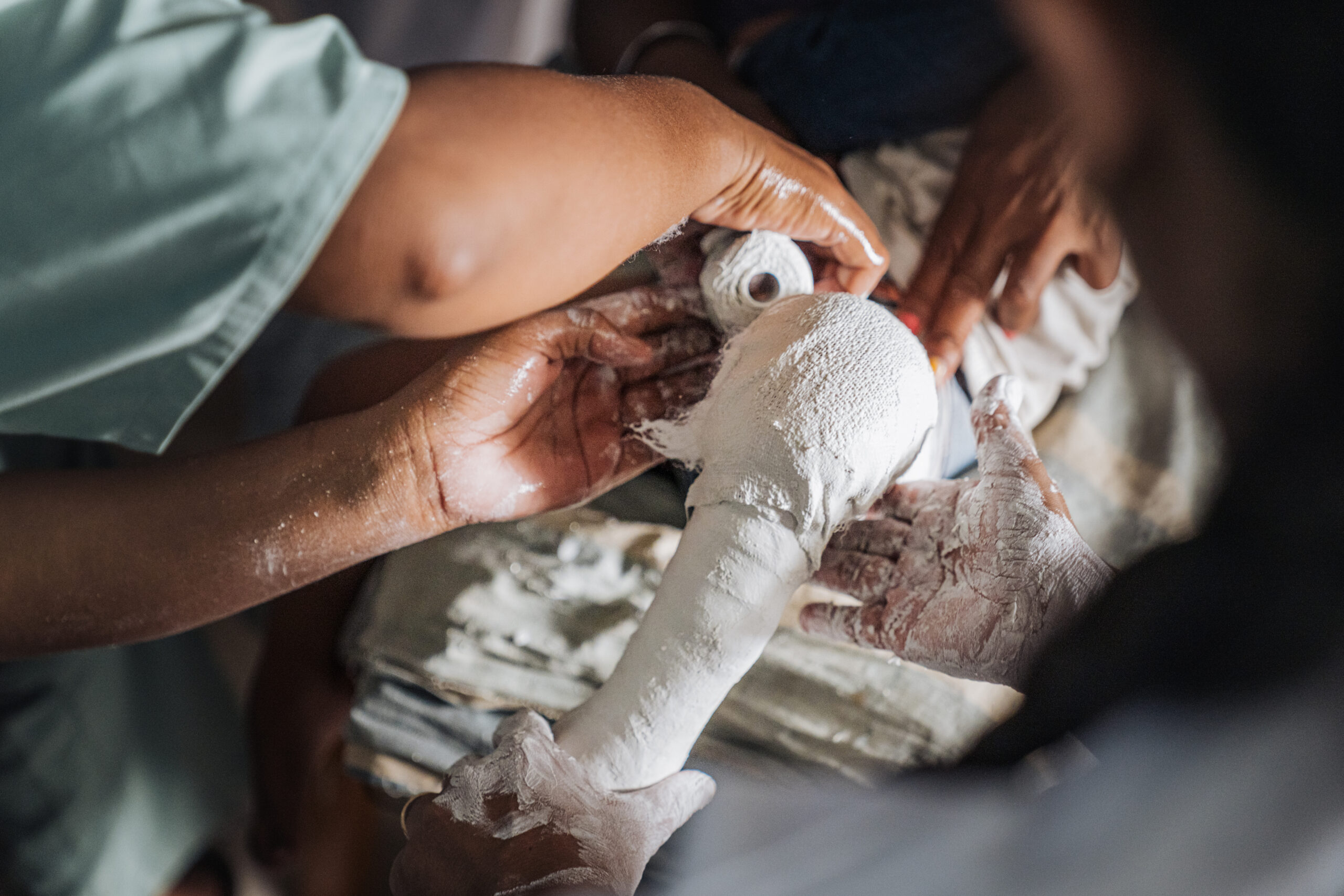
Nick Veltjens, kinésithérapeute et responsable du programme de mentorat sur le pied bot pour Mercy Ships, explique la différence : « En 2015 et 2016, l'accent était mis sur le développement des compétences pour traiter les jeunes enfants. Cette année, nous renforçons les capacités des cliniciens locaux à traiter des enfants beaucoup plus âgés. »
Bien que les principes de la méthode Ponseti restent les mêmes, le traitement des enfants plus âgés nécessite des compétences supplémentaires, de la patience et de l'expérience.
Bien qu'il ait d'abord été soigné dans la même clinique que son petit frère, Fanirisoa a suivi un parcours plus exigeant : des semaines de plâtres soigneusement appliqués, une correction progressive, une petite mais cruciale intervention chirurgicale à bord du navire-hôpital, et un suivi rigoureux. Son traitement n'était pas seulement une question de rétablissement de sa propre mobilité — il faisait aussi partie d'une formation pratique qui permettrait aux cliniciens locaux de continuer à traiter des enfants plus âgés bien après le départ de Mercy Ships.
Dre Saholy reconnaît la portée plus large de ce partenariat avec les équipes de santé locales : « Mercy Ships ne se contente pas de prodiguer des soins. Ils forment les professionnels de santé locaux. Ils partagent des connaissances, et cela renforce notre expérience. »
Pour elle, ce travail est important car il construit des compétences qui dureront bien au-delà des patients traités.
Traitement du pied bot : transmettre un héritage
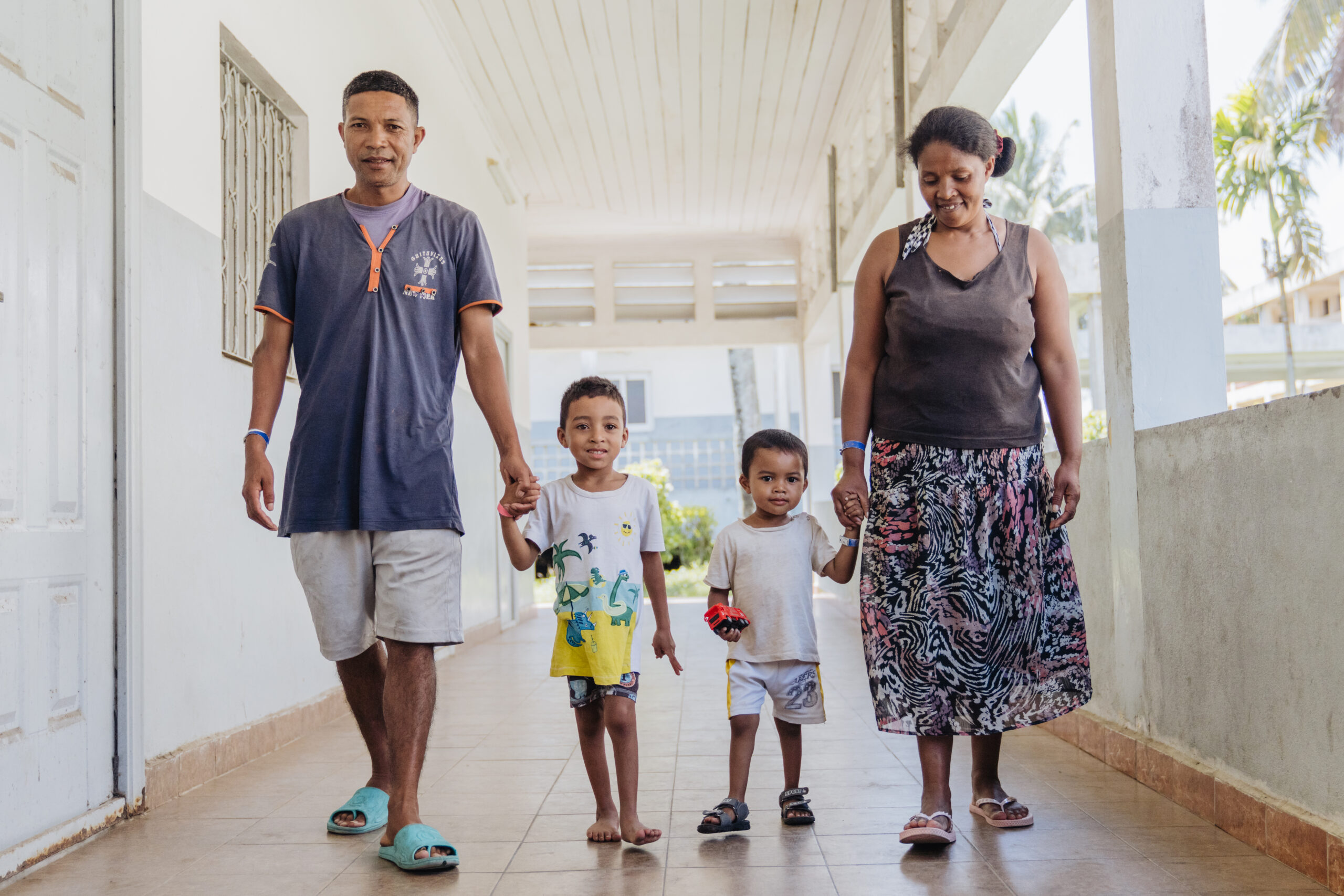
Voir ses fils marcher et se déplacer sans douleur était une sensation extraordinaire pour Edmine.
« Maintenant, leurs pieds sont droits et ils peuvent marcher normalement. Sans traitement, cela aurait été un lourd fardeau pour nous en tant que parents. » Il réfléchit : « Nous ne pourrons pas toujours être à leurs côtés, et vivre avec ce handicap aurait été très difficile. »
Ce qu’il souhaite maintenant, c’est une vie en toute liberté pour ses fils.
« Leurs pieds sont comme ceux de tout le monde . Ils peuvent faire tout ce que les autres font. »
Derrière ces progrès se cache un engagement à long terme en matière de formation, qui s’étend bien au-delà d’une seule famille. Le Dr Rachel Buckingham, chirurgienne orthopédique britannique bénévole pour Mercy Ships, a aidé à former des chirurgiens malgaches aux petites mais décisives interventions utilisées dans le traitement du pied bot.
« L’objectif est de renforcer l’enseignement et la formation locaux afin qu’un jour, Mercy Ships ne soit plus nécessaire », explique-t-elle.
Soignés côte à côte, Fanirisoa et Vonjy portent en eux l’impact de deux moments clés : l’un façonné par une formation initiée il y a dix ans, l’autre contribuant à former l’avenir.
Quand le savoir est partagé, la guérison ne s’arrête pas, elle se multiplie.